Lake House Vs Coastal Living Room Design: What Works In Both
I own both a lake house and a beach house, and decorating the two has taught me something I didn’t necessarily expect: lake house and coastal living room design have more in common than they have differences.
Both should feel relaxed. Both need to stand up to people coming in from the water. And in both homes, I want the living room to feel connected to whatever is happening outside the windows rather than like a completely separate, overly decorated space.
Where they really differ is in the mood.
My beach house naturally suits a lighter, airier approach, while a lake house can handle more warmth, wood, and visual weight. That doesn’t mean you need anchors and seashells at the beach or plaid and paddles at the lake. In fact, I think both styles look better when you avoid taking the theme too literally.
If you’re trying to decide between lake house vs coastal living room design, start with the view outside your window. Then use color, texture, furniture, and personal details to complement it.
Here’s what I think works in both—and where I would let the two styles go in different directions.
Lake House and Coastal Living Rooms Feel Different
The biggest difference between lake house and coastal design isn’t a particular piece of furniture. It’s the feeling you’re trying to create.
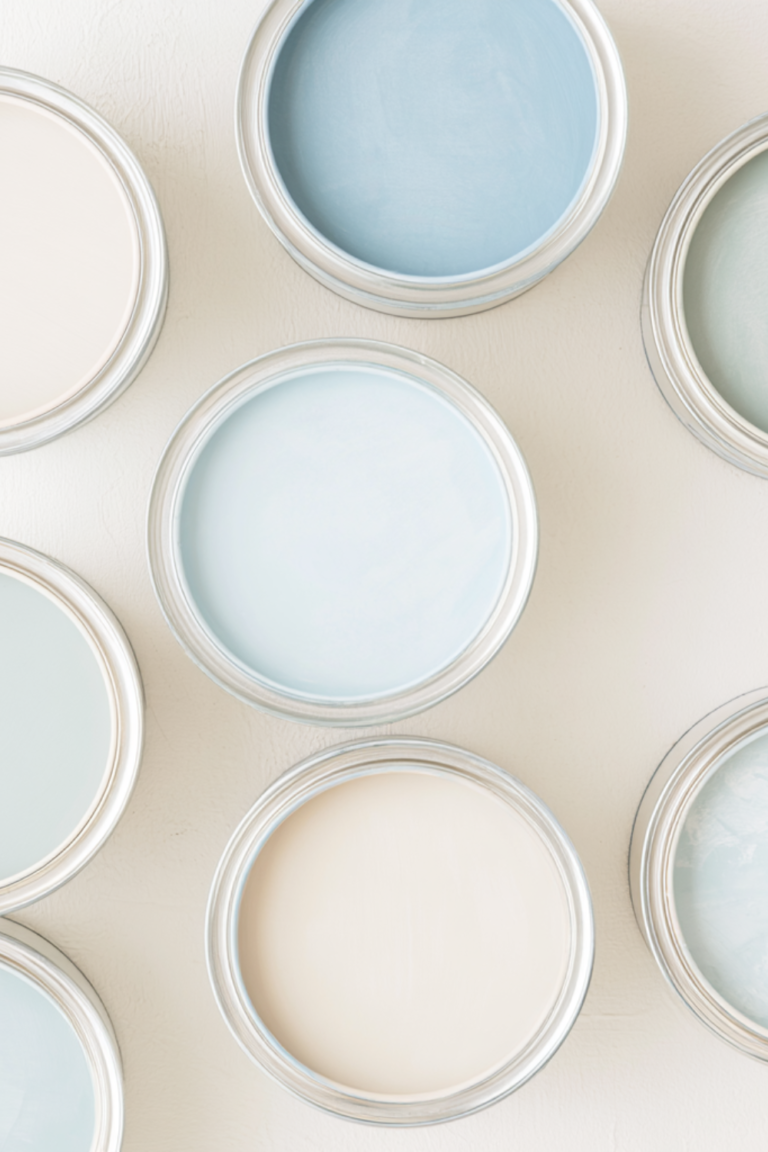
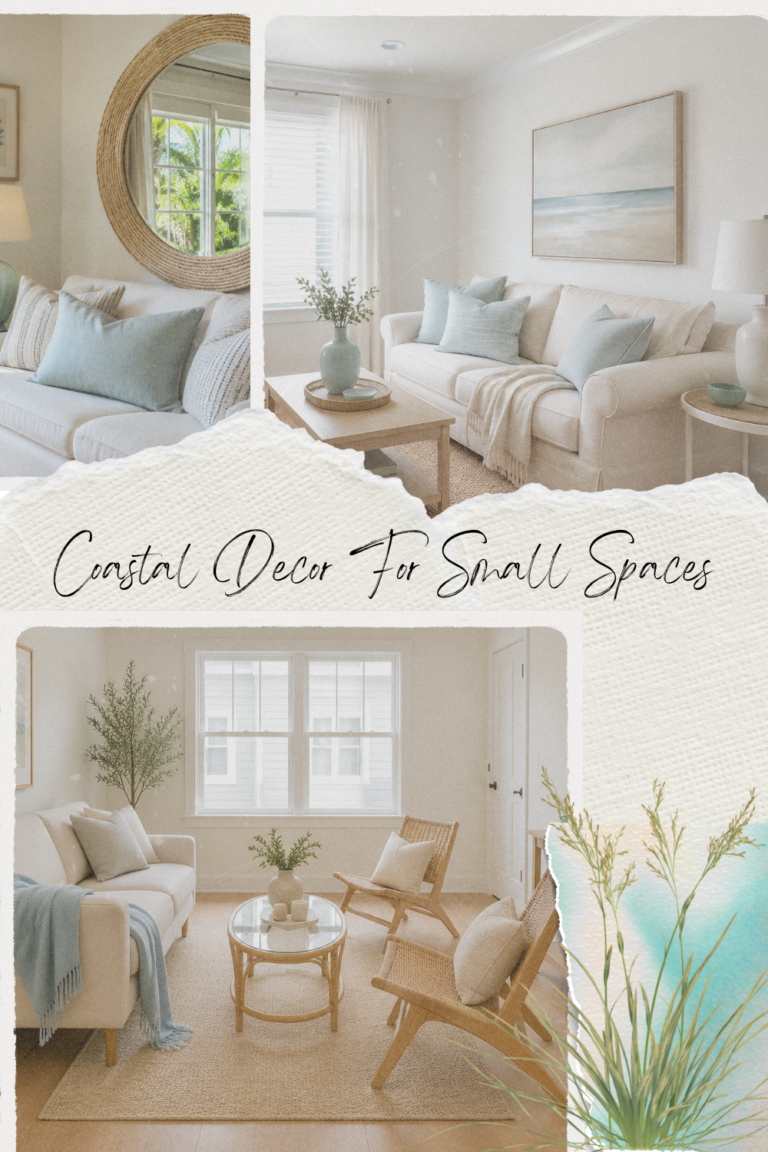
A coastal living room tends to feel lighter, brighter, and a little more open. Whites, sandy neutrals, soft blues, pale woods, and weathered finishes all make sense because they reflect the colors you naturally see around a beach.
Lake houses can feel more grounded.
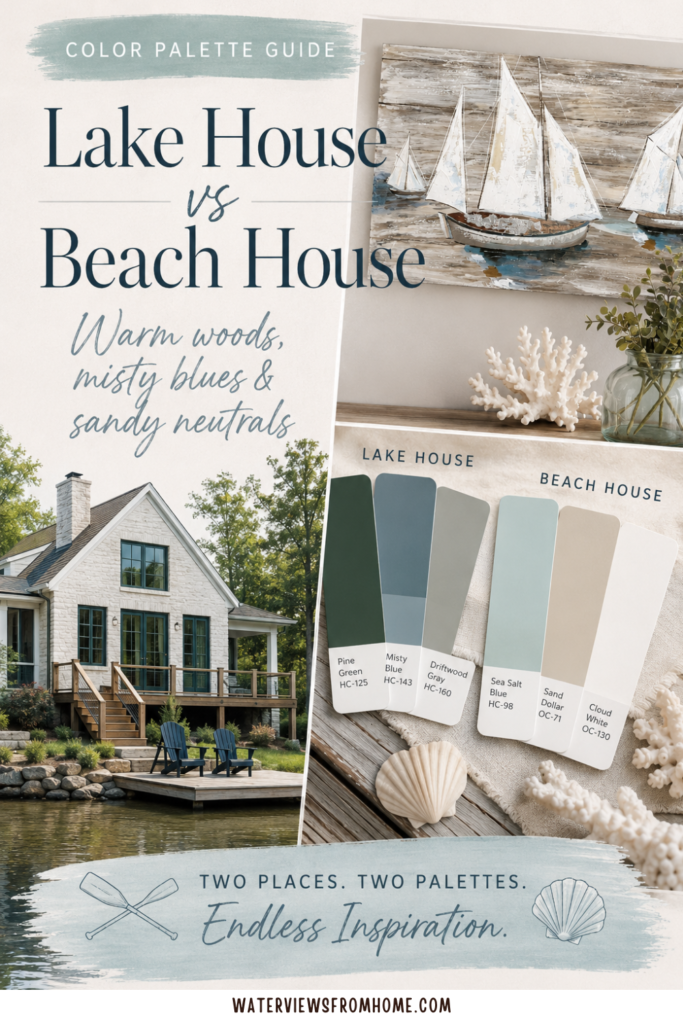
A lake may still give you beautiful blue water, but there are often trees, darker shorelines, docks, and more greenery surrounding it. That’s why I like warmer woods, deeper greens, driftwood grays, and slightly richer neutrals in a lake house.
My easiest design rule is simply to look out the window.
If you’re looking at open water, bright sky, and sand, a lighter coastal palette usually makes sense.
If your water view is surrounded by trees and a quieter, wooded shoreline, the room can usually support warmer colors and heavier natural materials.
I don’t think the interior should compete with the landscape. I want it to feel like it belongs there.
Let the View Choose Your Color Palette
Owning homes in both settings has made me much less interested in following a predetermined “coastal color palette” or “lake house color palette.”
I would rather pull colors from the actual location.
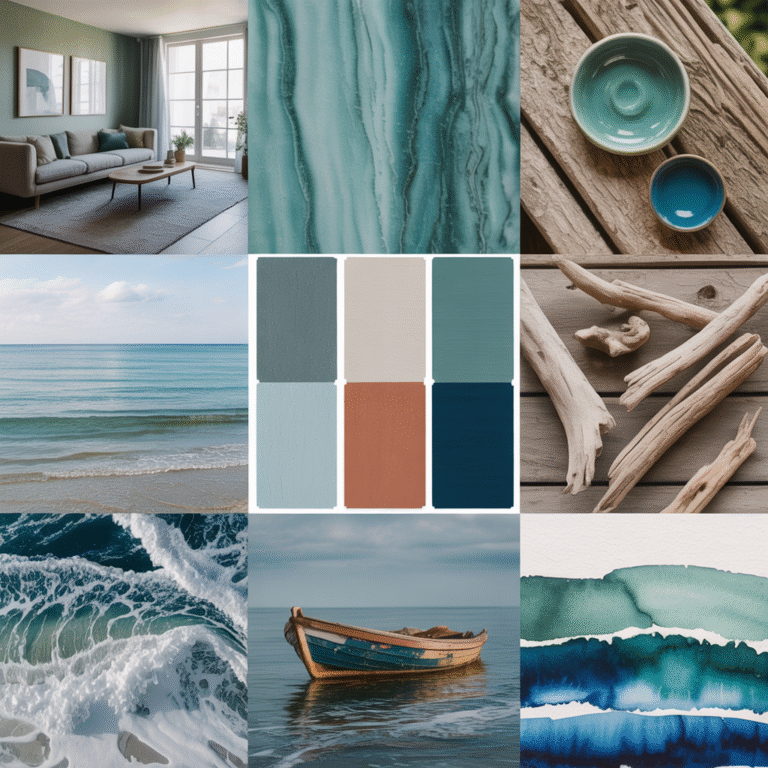
At a beach house, that could mean:
- Soft white
- Warm sand
- Pale blue
- Sea glass green
- Light natural wood
- Muted gray-blue
At a lake house, I tend to prefer colors such as:
- Warm white
- Driftwood gray
- Forest or mossy green
- Deeper blue
- Medium or warm wood tones
- Earthy brown and taupe
There can obviously be crossover.
Blue doesn’t belong exclusively at the beach, and wood doesn’t belong exclusively at the lake.
What changes is the balance.
A coastal room may be mostly light neutrals with blue used as an accent, while a lake house can usually take a little more contrast and warmth without losing the relaxed waterfront feeling.
If you’re stuck choosing paint, furniture, or accessories, step away from Pinterest for a minute and look at the colors immediately outside your home.
Those are usually a better starting point than whatever happens to be trending.
Comfortable Furniture Works in Both
This is one area where I don’t think you need to choose between lake house and coastal style at all.
Waterfront houses are meant to be lived in.
People come in after boating, swimming, sitting on the dock, walking the beach, or spending the afternoon outside. I don’t want a living room that makes everyone nervous about sitting on the sofa.
For either home, I prefer comfortable, relaxed furniture over anything too precious or formal.
That means looking for things like:
- Deep, comfortable seating
- Durable upholstery
- Washable or practical fabrics
- Relaxed pillows and throws
- Rugs that don’t feel too formal
- Furniture people can actually put their feet up on
The exact look can change.
At a beach house, lighter upholstery and pale finishes help keep the room airy.
At a lake house, I think you can go a little warmer or deeper with upholstery, leather, wood, and heavier textures.
But the purpose stays the same: the room should make people want to sit down and stay awhile.
That’s more important to me than creating a perfectly styled living room that looks untouched.
Natural Texture Keeps Both Styles From Feeling Flat
Texture is one of my favorite ways to decorate any waterfront home because it adds interest without needing a lot of obvious themed accessories.
This is also where coastal and lake house living rooms can start to develop their own personalities.
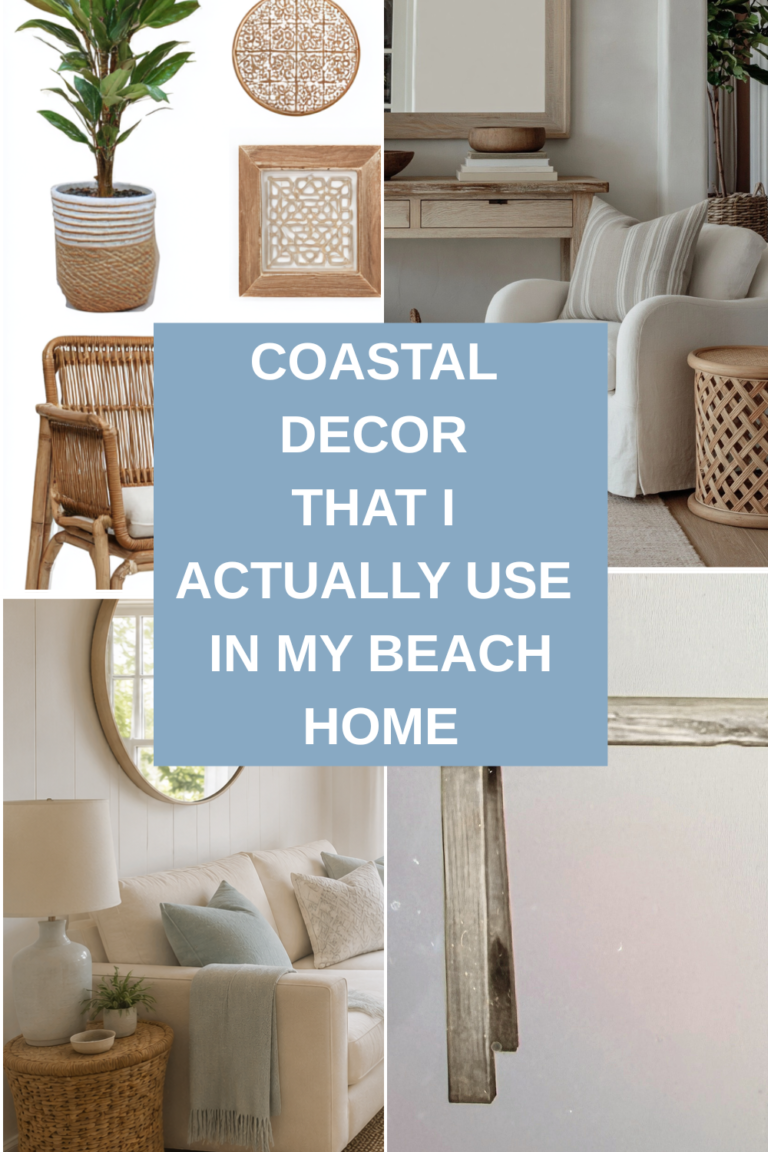
For a coastal living room, I like the feeling created by materials such as linen, jute, woven fibers, pale woods, and light natural finishes.
At the lake, I still want those natural elements, but I think the room can handle a little more weight. Woven baskets, chunkier throws, reclaimed or warmer wood, handmade pottery, and deeper natural finishes all work beautifully.
Some materials work equally well in both:
- Woven baskets
- Linen curtains
- Natural fiber rugs
- Handmade ceramics
- Wood accents
- Knit throws
- Collected natural materials
For me, this is a much better way to create a sense of place than filling the room with obvious “lake” or “beach” decorations.
A woven basket feels coastal because of its texture, but it doesn’t scream BEACH HOUSE.
A beautiful piece of wood can feel perfectly at home beside a lake without having a fish painted on it.
That’s the balance I prefer.
I want people to feel where they are without the room having to announce it.
Don’t Let Waterfront Decor Become a Theme
This may be the biggest mistake I see with both lake and beach decor: taking the location too literally.
You don’t need anchors in every coastal room.
And you don’t need bears, fish, paddles, and signs announcing “Lake Life” in every lake house.
One or two meaningful pieces can be wonderful. An entire room of them starts to feel more like a theme than a home.
Instead, I prefer to create the setting through color, natural materials, comfortable furniture, and objects that actually mean something to the people who live there.
If you have a vintage paddle that’s connected to your family or the lake, use it.
If you collected a beautiful piece of driftwood on your own shoreline, that’s much more interesting to me than buying generic waterfront decor simply because it matches the theme.
The goal isn’t to prove that you’re near water.
The windows already do that.
Arrange the Living Room Around the View
Whether I’m thinking about a lake house or beach house, I never want the best view in the house to become an afterthought.

If you have beautiful water outside your windows, let that influence the furniture layout.
That might mean orienting the sofa or chairs toward the water rather than automatically pointing everything toward a television.
It may mean keeping furniture lower near important sightlines.
And it usually means being careful with anything that unnecessarily blocks natural light.
I especially like simple window treatments in waterfront living rooms. Heavy drapes can visually close off a room that should feel connected to the outdoors.
Light curtains, woven shades, or minimal window treatments keep that relationship between inside and outside much stronger.
The exact scenery may be different—a beach horizon feels very different from a quiet lake surrounded by trees—but the principle is the same:
The view is already one of your best decorating features. Use it.
Personal Decor Makes a Waterfront Home Feel Real
Some of my favorite waterfront rooms aren’t the most perfectly decorated ones.
They’re the ones that tell you something about the people who spend time there.
That’s especially important in second homes, vacation homes, lake houses, and beach houses because so many memories become attached to the place.
Instead of buying every accessory at once, I like the idea of allowing a room to develop over time.
That might include:
- Family photos taken at the lake or beach
- Art connected to the area
- A vintage paddle or piece of boating history
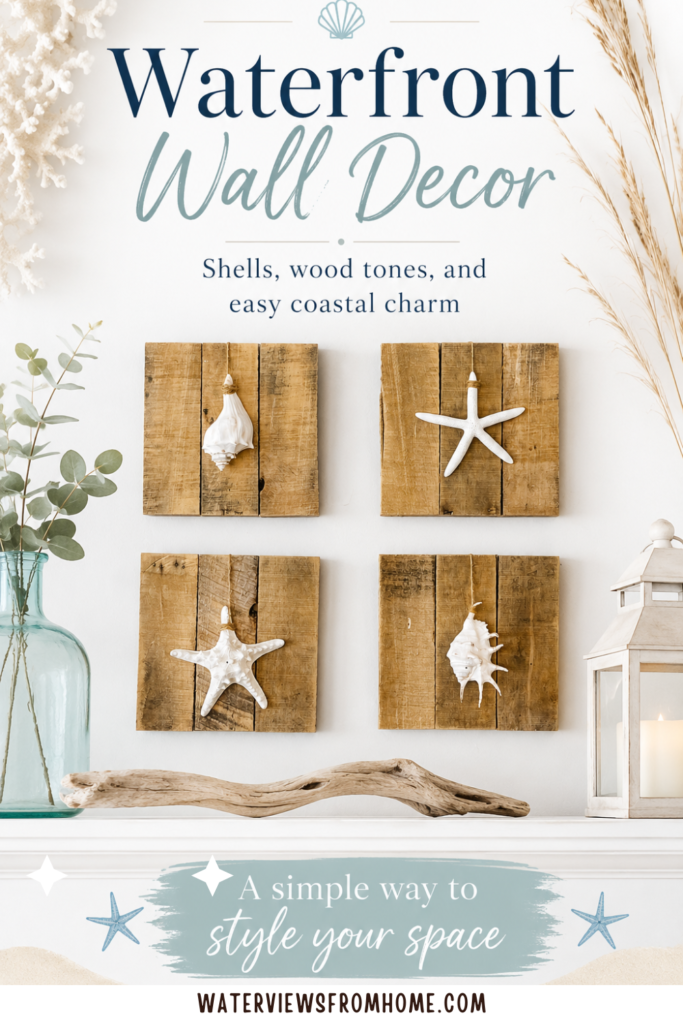
- Driftwood or other naturally collected objects
- Handmade pottery
- Books you actually read while you’re there
- Travel finds with a story behind them
- Something passed down through your family
Those things don’t have to match perfectly.
In fact, I think waterfront homes often feel better when they don’t.
A living room that has evolved over time usually feels warmer and more interesting than one where every pillow, lamp, and accessory came from the same collection.
Give the Room Space to Breathe
Another thing that works in both lake house and coastal living room design is restraint.
Waterfront rooms already have a lot going on visually outside.
You may have moving water, trees, boats, sky, changing light, or people constantly coming and going. The interior doesn’t need to fight for attention.
I prefer fewer pieces that have a purpose rather than filling every surface simply because there’s an empty spot.
That might mean one larger piece of art instead of a wall packed with small accessories.
It might mean a coffee table with a few meaningful objects rather than ten decorative items.
And it definitely means leaving enough physical room for people to move comfortably through the space.
This doesn’t mean your living room has to be minimalist.
It just needs enough breathing room to maintain the relaxed feeling that makes waterfront homes so appealing in the first place.
So Should You Choose Lake House or Coastal Style?
If you’re deciding between the two, I wouldn’t start by asking, “Do I like lake decor or coastal decor better?”
I’d ask:
What does my particular home want to be?
Look outside.
Is the landscape bright, sandy, and open? I’d lean lighter and more coastal.
Is the water surrounded by woods, stone, docks, and deeper natural colors? I’d bring more warmth and texture into the room.
Then think about how you actually use the house.
A home filled with kids, pets, wet swimsuits, and weekend guests needs different furniture than a quieter home occupied by two adults.
Your design should reflect your life as much as it reflects your location.
And you don’t have to follow every rule of one style.
Living with both a lake house and a beach house has made me appreciate how much crossover there really is. Comfortable furniture, natural materials, an uncluttered room, meaningful objects, and a connection to the water work beautifully in either setting.
The difference is in how you interpret them.
Create a Waterfront Living Room That Feels Like Your Home
The best lake house and coastal living rooms aren’t memorable because they followed a perfect decorating formula.
They’re memorable because they feel connected to their surroundings and comfortable for the people who actually use them.
Start with the view. Pull colors and textures from what you see outside. Choose furniture that can handle real life. Add personal pieces gradually rather than decorating around a theme.
Then let your home develop its own personality.
That’s ultimately what I want from both my lake house and beach house: not rooms that look like someone else’s idea of waterfront living, but spaces that make sense for where they are and how we actually live in them.
More Ways to Bring This Look Home
If you want to go deeper on any of these ideas, a few related guides worth reading next:
- Coastal Living Room Decor Mistakes to Avoid — the missteps that push a room from “relaxed” into “sterile” or “themed”
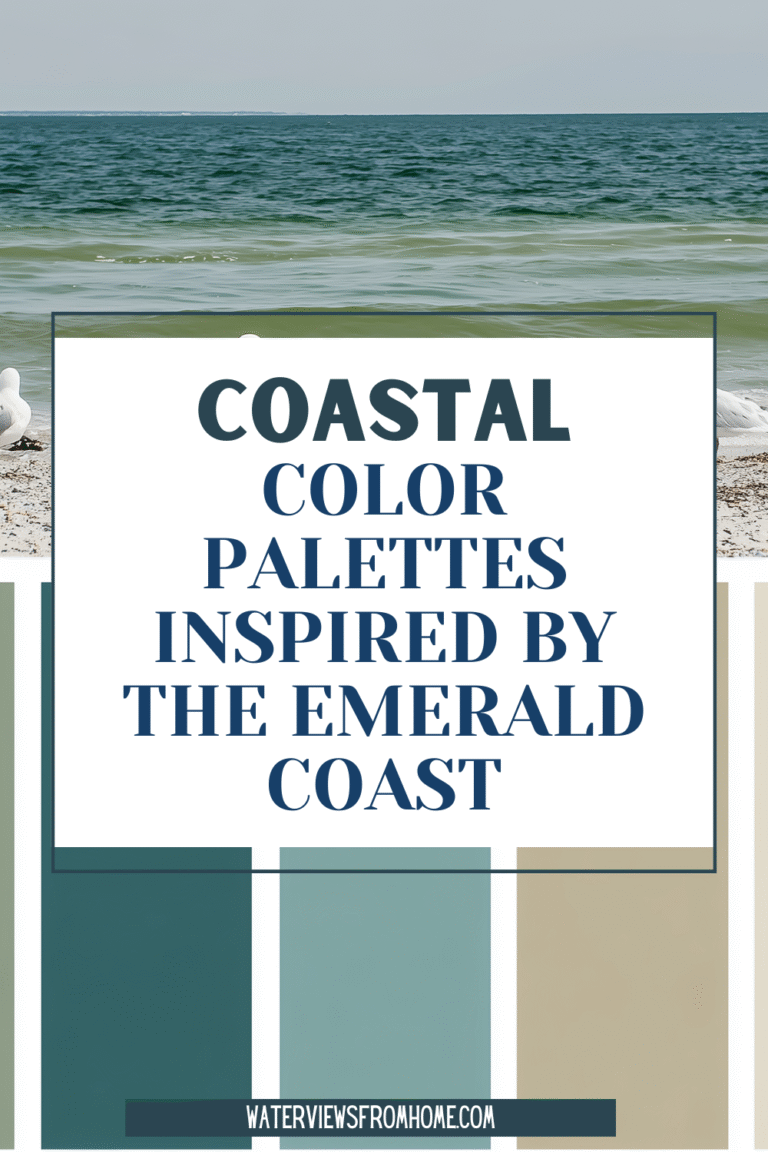
- 5 Coastal Living Room Color Palettes Inspired by Destin and the Emerald Coast — specific palette combinations to start from
- Neutral Coastal Living Room Ideas From a Florida Local — a real-home example of the style in action
- The Complete Waterfront Home Color Guide — for pairing interior and exterior paint colors
- 10 Ways to Bring Coastal Style Into Your Home Without Going Nautical — if you’re starting from scratch